Assistive Technology Evaluation Process
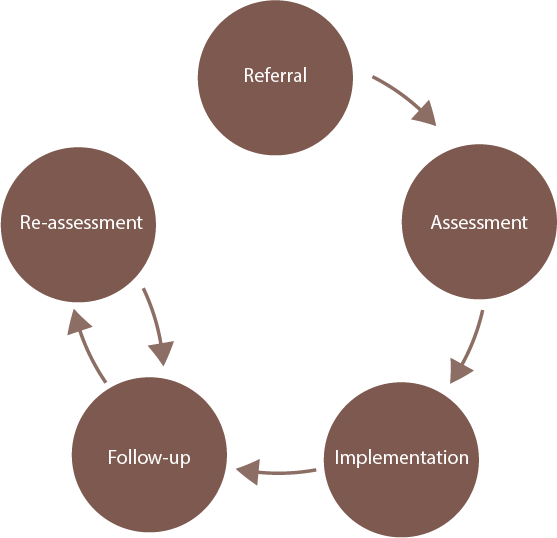
- Referral: referral is received for AT evaluation
-
Assessment:
has to utilize an interdisciplinary approach in order to be successful, different disciplines offer unique perspectives and information pertaining to the client
-
Gather and analyze patient information
- physical, cognitive, and perceptual attributes
- psycho-social issues
-
List goals and desired outcomes
- short and long term goals
-
Define desired features
- control needs
- Consider available interventions
- Select intervention
- Make recommendation
-
Gather and analyze patient information
- Implementation: Provide AT devices to the client
- Follow-up: Get feedback on the provided AT
- Re-assessment
AT Provision Process
Current Treatment Models
1
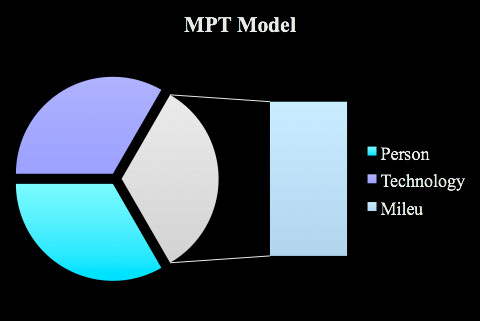
1. Matching Person and Technology Model (MPT): a holistic client-centered model, which considers users’ expectations, preferences, background, family and environmental influences, and economic factors in the determination of appropriate AT (Institute for Matching Person and Technology, 1999)
-
-
Areas of consideration:
- Milieu- characteristics of the settings in which the AT is to be used
- Person- information about the user’s personal characteristics and temperament
- Technology- specific characteristics of the technology itself, including design factors and funding
-
Areas of consideration:
SETT Framework
2
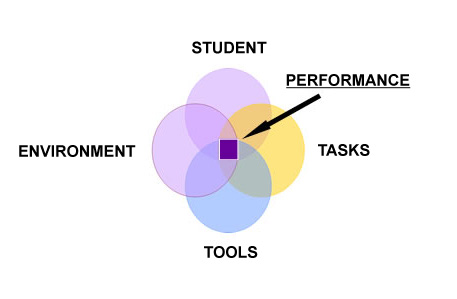
2. Student, Environments, Tasks, and Tools framework (SETT): was designed for use with students with disabilities from zero to 15 years old. SETT serves as “guideline for gathering data in order to make effective AT decisions” (Zabala, 1998). The intended outcome of using the SETT is to find an appropriate match between the student, the environment, the tasks, and the technology used to accomplish tasks within the environment.
-
-
Areas of consideration:
- Student
- Environment- physical environment
- Tasks- activities the student is asked to perform along with the barriers to performance
- Tools- available AT devices and services
-
Areas of consideration:
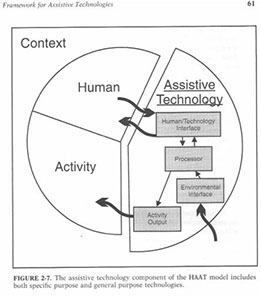
HAAT Model
3
3. Human Activity Assistive Technology model (HAAT): proposes a framework for understanding the place of assistive technologies in the place of the lives of those with disabilities. This model takes into consideration the individual’s current skill level, the activity (self-care, work/school, play/leisure) that the individual is expected to perform, and the context (social, cultural, and physical) in which the activity takes place (Cook & Polgar, 2008)
-
Areas of consideration:
- Human - the person with the disability
- Activity - what the person wants to do
- AT - what AT the person uses to perform the activity
- Context- environmental considerations
Current AT Assessments
Occupational therapy assessments for assistive technology involve a review of the client’s occupational roles, physical and cognitive abilities, as well as preferences and intended use of the technology. The client’s receptiveness to the device/modification and their social, cultural and physical environment are important factors that are considered. A trial is often recommended for complex devices to ensure the suitability of the technology for the client’s needs. Occupational therapists provide instruction in the use and proper care of assistive technology, as well as inform the client, and others involved in the use of the technology, how it promotes independence and safety in occupational performance (http://www.caot.ca/default.asp?pageid=4184).
- Assitive Technology Service Method
-
Assistive Technology Device Predisposition Assessments (ATDPA)
- This tool assesses a person’s perceived quality of life through consumer participation in developing and setting AT goals and by helping the consumer to better understand his or her own needs and interests while identifying obstacles to AT use (Scherer & Cushman, 2001)
-
Quality of Life Index-Spinal Cord Injury (QLI-SCI
)
- Measures the quality of life in SCI population by measuring both satisfaction with aspects of quality of life and importance of those aspects of quality of life in 4 domains: 1. health and functioning 2. psychological/spiritual 3. family 4. social and economic (http://www.scireproject.com/outcome-measures-new/quality-of-life-index-qli-sci-version)
-
Informal Assessments and Observations
- Occupational Profile: Allows a therapist to obtain information regarding a client's past, current, and future occupations. This is helpful in facilitating client centered outcomes and AT useful to the client. (https://quizlet.com/85573719/developing-an-occupational-profilethe-next-step-flash-cards/)
- Skilled Observation

Launch ATPT-OT
(Assistive Technology Prescription Tool - Occupational Therapy)